Low-Waste Household Products Worth Switching To

My recycling bin used to be the only "green" thing about my home. Then I started actually paying attention to what I was buying, and honestly? It got a little uncomfortable.
I'm not talking about guilt-tripping yourself into a zero-waste lifestyle overnight. That's exhausting and kind of unrealistic. But there's this sweet spot where switching a few regular household products to better alternatives actually feels good, saves money over time, and doesn't turn your bathroom into a compost heap. That's the stuff I want to talk about.
Low-Waste Household Products That Are Actually Worth Your Money
Okay so here's the thing about sustainable swaps. Most people think it means spending twice as much for something that works half as well. And yeah, I've been burned by that. I once bought a bamboo dish brush that fell apart in like three weeks. But I've also found some genuinely solid products that I'd recommend to literally anyone.
Bamboo kitchen products are probably where most people start, and for good reason. Bamboo grows incredibly fast, doesn't need pesticides, and biodegrades without leaving a mess behind. Bamboo cutting boards, utensil sets, reusable paper towels made from bamboo fiber, even bamboo dish cloths. If you're shopping at a zero waste store online, these are usually front and center. And honestly, they look pretty great on a kitchen counter too, which is a totally valid reason to buy them (don't judge me).
Reusable eco products are the other big category. Beeswax wraps instead of plastic wrap. Silicone zip bags instead of disposable ones. Glass food containers that last basically forever. I've had the same set of glass containers for four years now. Four years. Compare that to the sad graveyard of warped plastic Tupperware I used to accumulate.
Here's a real moment: my friend Sara was complaining about how much she spends on paper towels every month. She estimated like $15-20. Which, over a year, is almost $200 on something you use once and throw away. She switched to a set of reusable cotton unpaper towels from an ethical online marketplace, spent about $30 upfront, and hasn't bought paper towels since. That was two years ago. The math isn't complicated.
Biodegradable household goods are having a real moment right now. Compostable trash bags, plant-based cleaning tablets, soap bars with minimal packaging. These aren't niche anymore. You can find them pretty easily through any eco-friendly products online retailer, and more of them are showing up in regular stores too. Which is wild to think about compared to even five years ago.
What Actually Goes Into a Non-Toxic Home (And Why It Matters)
This is where I'll be honest: the non-toxic angle isn't just about the planet. It's about what's in your space every single day.
Research published through the NIH has found that indoor air can actually be more polluted than outdoor air, partly because of the chemicals in conventional cleaning products and synthetic materials. Which, once you know that, you can't really unknow it.
Non-toxic home products don't mean less effective. People always assume this. But enzyme-based cleaners, castile soap, vinegar solutions, they actually work. I use a concentrated plant-based cleaner I dilute myself. One bottle lasts months. No harsh fumes, no single-use plastic bottles piling up.
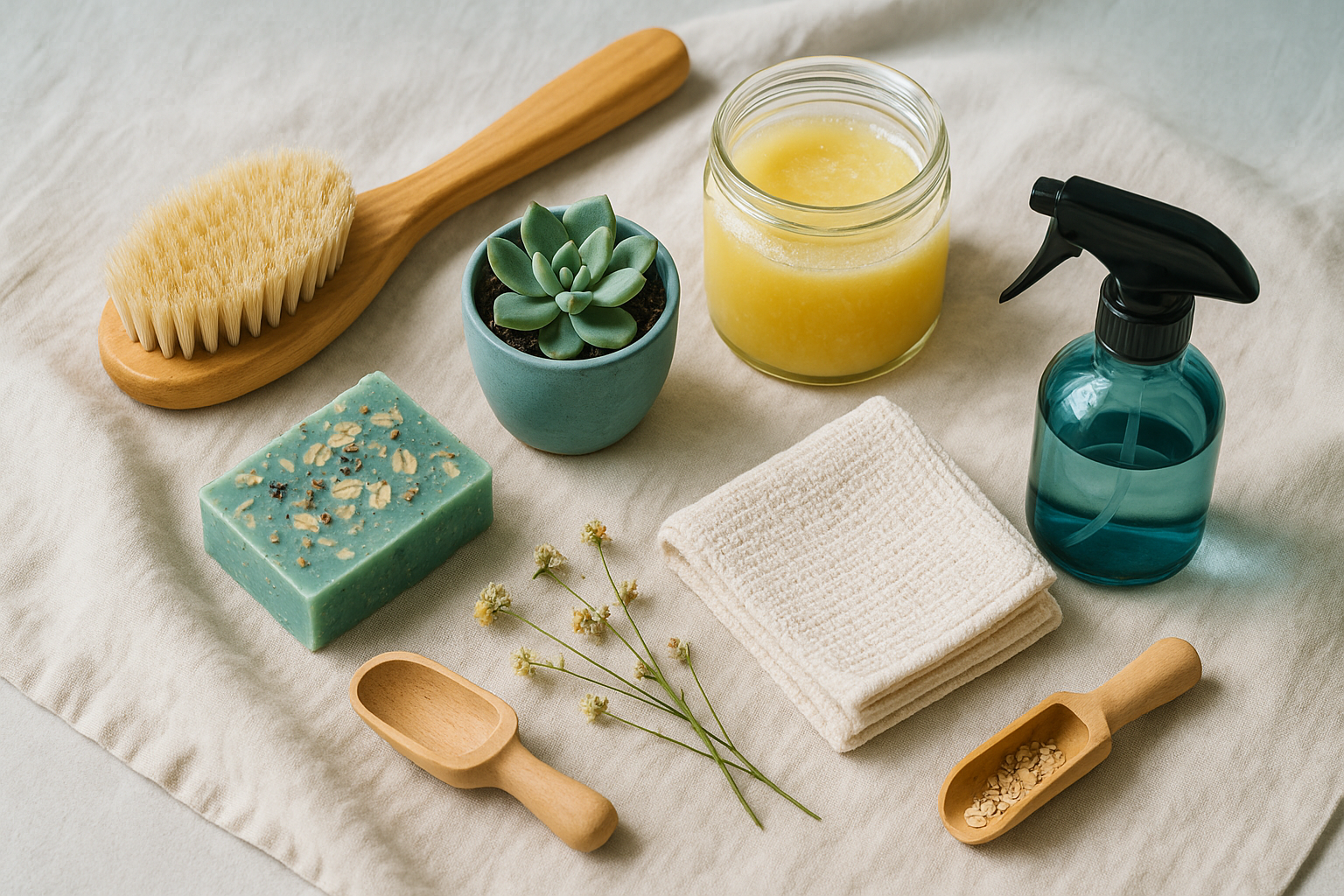
The bathroom is where I made the most switches and felt the biggest difference. Shampoo bars from an organic vegan fair trade shop I found online replaced three plastic bottles. Bamboo toothbrushes. Refillable deodorant. Compostable cotton rounds. Little changes, but they add up fast. My bathroom trash literally barely fills up anymore, which sounds like a small thing until you're the one taking out the trash every week.
Eco-friendly beauty products deserve their own conversation, honestly. The beauty industry is one of the biggest plastic producers out there, and most of it is completely unnecessary. A solid mascara in a cardboard tube works just as well as one in a plastic wand. Shampoo bars from a good plastic-free products shop can genuinely rival a salon bottle, once you get through the adjustment period (which is real, bear with me, your hair takes about two weeks to recalibrate).
There's a concept called the "ecoproduct" approach, which is basically just asking: does this serve its purpose without causing unnecessary harm in how it's made, packaged, or disposed of? It sounds fancy when I type it out like that. But really it's just a useful filter when you're standing in a store or scrolling through a sustainable lifestyle shop online, wondering if you actually need the thing.
How to Start Shopping More Sustainably Without Losing Your Mind
I personally think the worst advice in sustainable living is "do everything at once." Nobody does that. Nobody should.
What actually works is the replacement method. When something runs out, replace it with a better version. Don't throw away your existing stuff to buy eco alternatives. That's just wasteful in a different direction. Use what you have. Then when it's gone, upgrade.
A few places genuinely worth knowing about: an ethical superstore eco products section is way more accessible than it used to be. Sites that function as a full eco shop online now carry everything from cleaning products to clothing to gifts. Speaking of which, sustainable gifts online have become a genuinely good option when you need a present for someone who has everything. A nice reusable kit, a set of eco products for home and body, a subscription to a refill service. People actually love that stuff now.
Eco-friendly clothing stores have also gotten way better. I'm not saying everyone needs to overhaul their wardrobe. But when you do need something new, looking at a responsible consumer products retailer or a dedicated eco-friendly clothing store online first is worth the extra five minutes.
The Ellen MacArthur Foundation has done solid work on why circular economy thinking matters for how products are designed and disposed of. It's worth a look if you want to understand the bigger picture of why this stuff matters beyond individual purchasing.
Here's a scenario I think about a lot. Imagine your typical Sunday grocery run. You've got your reusable bags. Fine. But your cart is also full of things wrapped in three layers of unnecessary plastic, cleaning products that'll sit in a landfill for centuries, disposable sponges, single-use wipes. The bags feel good, but they're kind of doing the least. Swapping in even two or three green products online shop staples, like a dish soap bar and a set of reusable produce bags, actually moves the needle more than the tote bag ever did.
The Green Products That Are Actually Trending Right Now
Okay, I've been poking around the sustainable living space for a few years, and some stuff has genuinely taken off lately.
Cleaning tablets are everywhere. You buy a small compostable packet, drop it in water, and it becomes a full bottle of cleaner. Zero plastic waste, light to ship, concentrated so it lasts longer. This is a good example of a product where the sustainable version is just... objectively better designed.
Refillable everything. Deodorant tubes, hand soap dispensers, even razors. The initial buy costs a bit more, but refills are cheap. A green products online shop will often have these bundled together which makes starting easier.
Wax wraps are still trending and I get why. They're tactile in a satisfying way, they actually work for wrapping cheese and fruit, and they look cool in your fridge (which, again, valid reason). An organic vegan fair trade shop will usually carry these alongside beeswax alternatives for vegans.
Bamboo everything, honestly. Bamboo toothbrushes were the gateway product for a lot of people, and that trend just kept going. According to research on bamboo's environmental properties, it sequesters carbon at a pretty impressive rate compared to other materials used in household goods. Pretty powerful stuff for something that started as a toothbrush trend.
The other big one is solid personal care. Solid shampoo, solid conditioner, solid body wash. A plastic-free products shop will stock all of these. Some are better than others, I'll be real. Trial and error is part of it.
A Few Things Worth Actually Doing This Week
If you want to start somewhere, here's what I'd suggest. Not a full lifestyle overhaul. Just a few moves.
First, audit your trash. Seriously, just look at what you're throwing away most often. That'll tell you where your biggest swap opportunities are, way better than any generic list.
Second, find one good eco shop online or zero waste store online that carries the things you actually use. Bookmark it. Use it when stuff runs out.
Third, stop buying disposable sponges. This one is easy and the reusable options are just better. A bamboo fiber scrubber or silicone sponge will outlast ten disposable ones.
Fourth, try one solid personal care product. Shampoo bar, soap bar, whatever fits your routine. Give it a few weeks before you judge it.
That's it. Four things. Not a personality change, not a vow of plastic-free living. Just four things that'll quietly add up.
Honestly, what got me here was less about the planet (though that matters) and more about just being sick of my home being full of cheap stuff that breaks and piles up. There's something genuinely satisfying about owning fewer, better things that last.
What's the one product in your house you've been meaning to swap out? Because I bet it's easier to find an alternative than you think.
---
ECOLOGY


Comments