Eco-Friendly Products Online Worth Shopping For

My recycling bin was overflowing on a Wednesday morning, coffee going cold next to me, and I was just... staring at a pile of single-use plastic I'd somehow accumulated in a single week. That was the moment I got serious about finding actual eco-friendly products online, not the greenwashed junk with a leaf logo slapped on it.
Here's the thing. The green products online shop landscape has gotten genuinely good. Like, surprisingly good. I remember when buying sustainable stuff meant either paying a small fortune or settling for products that kind of worked. That's mostly not true anymore. There are real options now, across every category, at prices that don't require you to refinance anything.
But it's also noisier. More brands, more claims, more "sustainably sourced" printed on packaging that's going straight to landfill. So let me cut through some of it.
What to Look for in an Eco-Friendly Products Online Store
Not every green products online shop is created equal. Some are genuinely committed to the whole thing. Others are... doing the bare minimum and hoping you don't read the fine print.
Honestly, the first thing I check is whether a shop carries products across multiple ethical certifications, not just organic OR fair trade, but ideally both. An organic vegan fair trade shop that also thinks about packaging is a much safer bet than one that slaps "eco" on a product because it contains one plant extract. If you want a deeper read on how to spot the difference, this guide on avoiding greenwashing with organic vegan fair trade labels is really worth your time.
I also look for plastic-free products. Not just the product itself, but the shipping. A bamboo toothbrush wrapped in three layers of plastic bubble wrap is... not the win you think it is. Good plastic-free products shop options are out there, and they're getting better at the whole packaging situation.
And here's something I don't see people talk about enough: return policies. An ethical online marketplace should make it easy to send things back if they don't work, without you having to ship them in a new plastic mailer. Some do this well. Some don't.
There's decent research piling up on how consumer choices around plastic and biodegradable materials actually affect environmental outcomes, and if you want to go deep on that, browsing research on plastic pollution and consumer goods is a good rabbit hole to fall into.
The Eco Products for Home and Body That I Keep Buying
Okay so I'll just tell you what's actually been good in my house. Take it for what it is, one person's experience, not a definitive ranked list.
Bamboo kitchen products have been a consistent win. I was skeptical, I'll be honest. I thought they'd feel cheap or fall apart fast. But a good bamboo cutting board? Holds up way better than I expected. Same with bamboo dish brushes. And unlike plastic ones, when they eventually wear out, I don't feel terrible throwing them in compost. Also worth noting: eco products for home and body that are made from bamboo tend to be genuinely affordable now, which wasn't always the case.
For body stuff, I switched to shampoo bars about two years ago. Wait, actually that's not quite right, I tried shampoo bars two years ago, hated the first one, and gave up. Then tried a different brand about a year ago and haven't looked back. The difference was formulation. Not all bars are made the same. Some leave your hair feeling like you washed it with craft soap from 1987.
Biodegradable household goods are another thing I've leaned into hard. Compostable bin liners, dish soap in concentrated tablet form, laundry strips instead of plastic jugs. These sound small. But when you add them up over a year, the difference in what you're sending to landfill is actually pretty significant. There's research on biodegradable materials and waste reduction if you want something more data-driven than my kitchen observations.
Reusable eco products are where I started, and they're still the most consistent category. A good set of beeswax wraps, some solid stainless steel containers, a water bottle that's survived being dropped approximately 400 times. These things pay for themselves fast. A friend of mine, Cara, laughed at me when I showed up to her place with reusable produce bags. Six months later she texted me asking where to buy them. Not gloating. Okay, maybe a little.
How to Find a Good Ethical Online Marketplace (Without Spending Three Hours Doing It)
Here's a mini-story that'll probably feel familiar.
I once spent 45 minutes researching an "eco" brand, read all the right things on their website, bought a set of their cleaning products, and then got them in the mail in more plastic packaging than I buy at the grocery store in a month. It was genuinely demoralizing. The product inside was fine, actually good, but the unboxing was a disaster and kind of killed my enthusiasm for the brand.
That experience taught me to look at third-party verification before I look at the brand's own story. B Corp certification is a good one. So is Fair Trade USA certification. So is Leaping Bunny for anything beauty-adjacent. If a brand is talking up their sustainability credentials but can't point to a single external certification, I'm skeptical.
A proper ethical online marketplace will usually carry multiple certified brands and be transparent about their own operations too, not just the products they sell. How do they ship? What's their carbon footprint policy? Do they offset? Some of the best shops I've found are actually smaller, more curated, rather than the huge everything-under-one-roof type. Less overwhelming, more intentional.
If you're looking at reusable eco products specifically, it's worth finding a shop that actually explains product lifespan and end-of-life options. Because a reusable product that lasts five years is genuinely sustainable. One that falls apart in six months isn't, even if the material sounds good on paper.
Sustainable Gifts Online and the Eco-Friendly Clothing Store Problem
Gifts. This is where things get fun, actually.
Sustainable gifts online have come a long way from the phase where everything vaguely ethical came in a hessian bag with a quote about the earth on it. (Nothing against hessian bags. But you know what I mean.) Now you can find genuinely beautiful stuff, things people actually want, that also happen to be made well and ethically sourced.
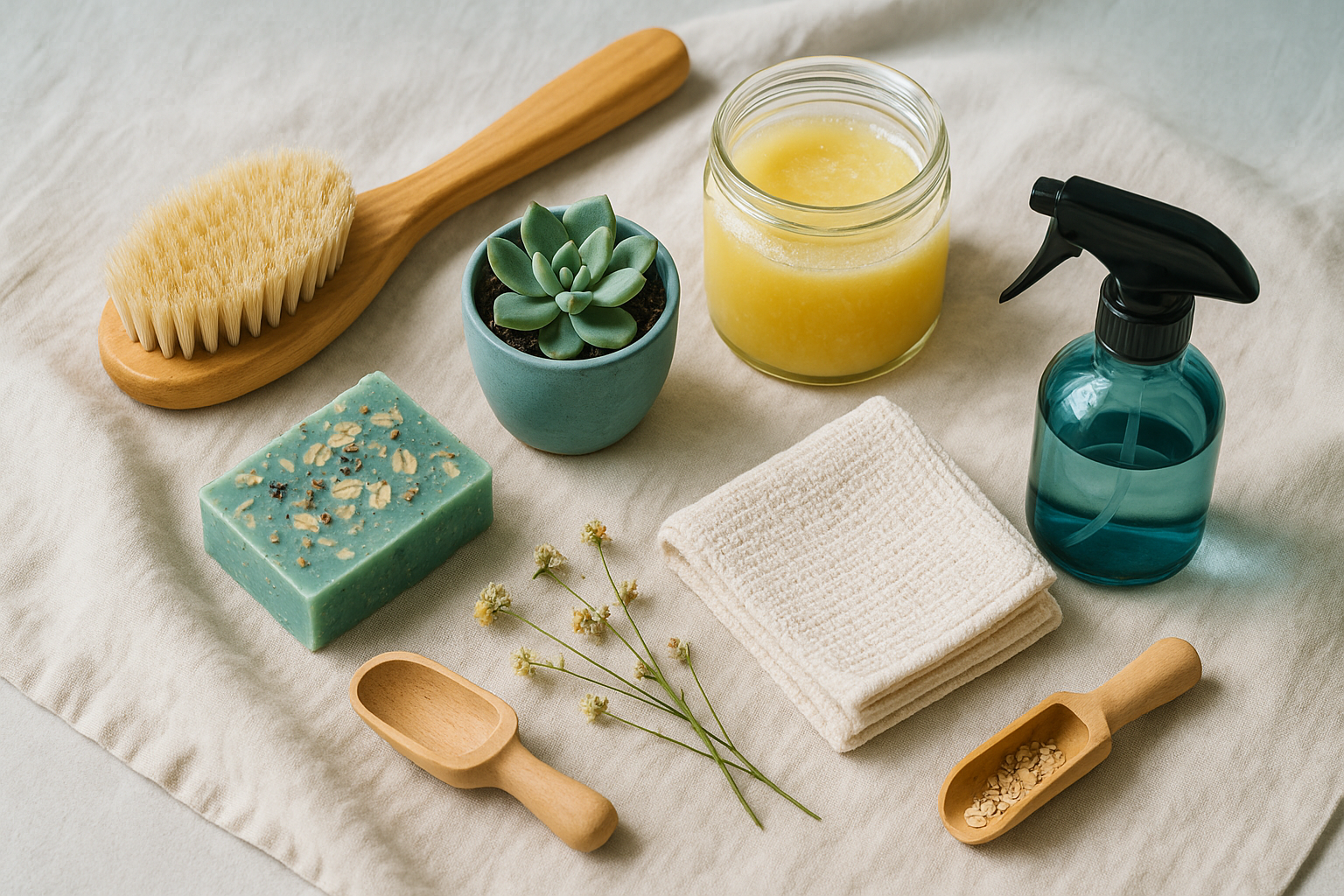
I've had real luck with ecoproduct gift sets, things like zero-waste bathroom kits or a bundle of bamboo kitchen products put together thoughtfully. They make surprisingly good presents because they introduce people to sustainable living without making them feel lectured at. Nobody likes being lectured at. Pretty powerful stuff, honestly, how the right product can shift someone's habits just by making the sustainable choice the convenient one.
Now, eco-friendly clothing store options. Okay, this is where I have to be honest: it's harder. The eco-friendly clothing store space has a greenwashing problem that's arguably worse than most other categories. "Sustainable fashion" often means "we used some recycled bottles in this polyester blend" and not much else. I've been burned a few times. What works for me is sticking to brands that are transparent about their supply chain, and not just with vague statements, but with specific factory information and worker pay data. Those exist. They're just not always the ones with the biggest Instagram following.
The ecoproduct category overall, though, meaning the broader world of certified ethical goods, is genuinely healthier than it was even a few years ago. More competition, more options, better quality. That's good for everyone.
If you're just starting to build out a more sustainable home, it doesn't have to happen all at once. That's the trap, thinking you need to replace everything immediately. Start with what you use most and wear out fastest. A plastic-free products shop is a good starting point because the swaps are usually simple, inexpensive, and immediately obvious in your daily routine.
Oh, and if you're looking for sustainable gifts for someone who's already pretty green in their habits, this list of sustainable gifts online has some genuinely non-obvious ideas that won't land in a drawer.
So. Where are you at with this stuff? Are you doing a full overhaul or just looking for one or two better swaps? I'm curious what's been hardest to replace, because for me it was definitely laundry products, and I feel like that's a conversation we should probably be having more.
---
ECOLOGY


Comments